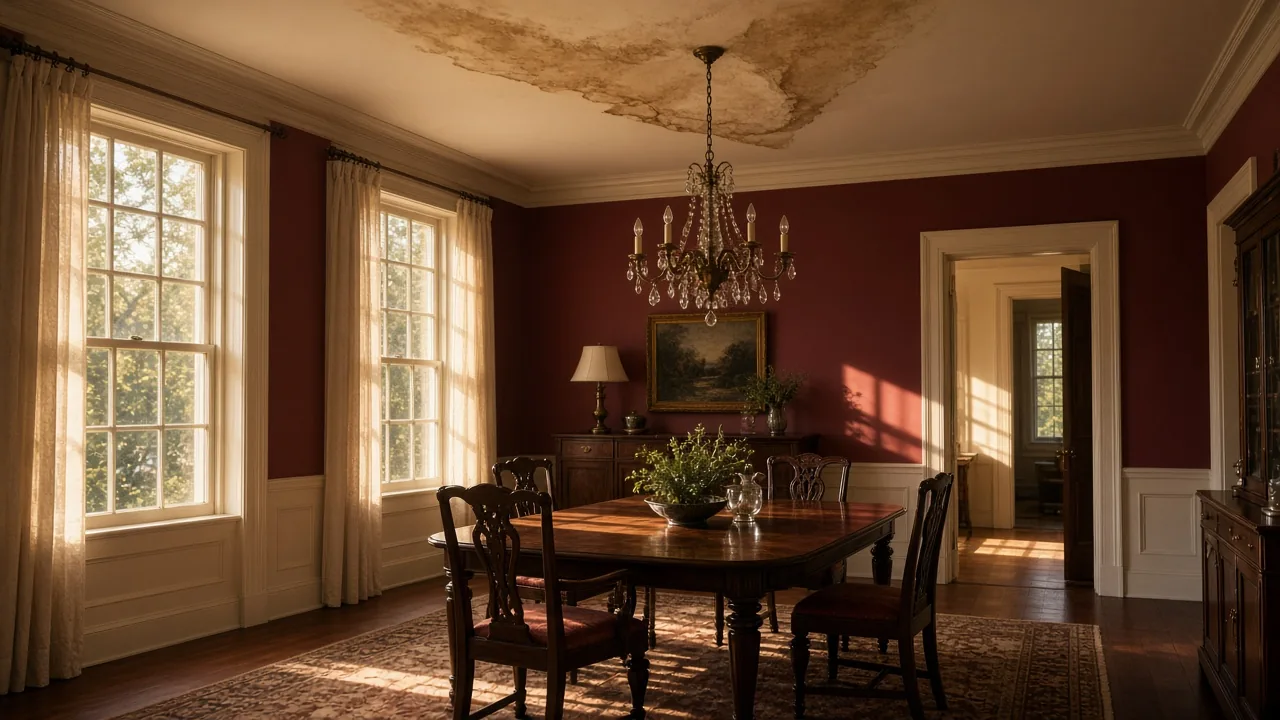
Mold Remediation in Lexington, Starting With the Moisture
Mold remediation in Lexington usually begins below grade. Basements that take on groundwater, crawl spaces with seepage and drywall that never fully dried after a leak are where we find most growth. Remove the mold without fixing the water and it comes back, so we deal with both.
Call (859) 555-0116 and we'll inspect it.
Prefer to talk? (859) 555-0116
Moisture First
The Kentucky Geological Survey lists wet basements, wet crawl spaces and seepage among Fayette County's land-use issues. Its notes also describe how leaking water mains, drains or sprinklers can soak swelling clay soils near foundations. Any of those can leave dampness where nobody sees it.
How Remediation Works
- Inspect. Moisture meters and thermal imaging find wet areas behind walls and under floors.
- Contain. Plastic barriers and negative air pressure keep spores out of the rest of the house.
- Remove. Moldy drywall, insulation and carpet come out. Framing is cleaned.
- Clean. HEPA vacuuming and wiping of surfaces in the work area.
- Dry. Dehumidifiers bring materials down to normal moisture readings.
- Rebuild. New materials go in only after the cause is fixed.
Small Spots You Can Handle
The EPA's guidance on mold and moisture says a homeowner can usually clean an area of roughly 10 square feet or less, with gloves, goggles and an N-95 respirator. Hard surfaces can be scrubbed with detergent and water and dried completely. Ceiling tiles, carpet and other absorbent materials that have grown mold may need to be thrown away.
Keeping It Dry
- EPA advises drying wet materials within 24 to 48 hours of a leak.
- Keep indoor humidity below 60 percent, and ideally in the 30 to 50 percent range.
- Run a dehumidifier in the basement through the summer.
- Extend downspouts and fix grading before refinishing the basement.
Mold often follows a flooded floor; our basement flooding page for Lexington explains the drying side. See what else we handle on our Lexington restoration home page.
Frequently asked questions
Should a Lexington home be tested for mold first?
Usually not if the growth is visible. Testing is useful when you smell mustiness but can't find the source.
Can bleach fix mold?
Bleach doesn't solve the moisture problem and doesn't work on porous materials like drywall.
Will mold come back?
Not if the moisture source is fixed and humidity stays down.